
Why Your Taco Catering Business Isn’t Showing Up on Google
Four reasons taco caterers stay invisible on Google, how to spot which one is hurting you, and what to fix first.
You are booked most weekends, but it is the same repeat clients and referrals every time. New customers are not finding you, and you already know it. You search your own city plus taco catering and barely come up. Meanwhile a caterer you know, with worse food, sits right at the top.
Most of the time this comes down to weak online signals, not weak food. Google is not sure what you do, where you work, or whether you are still active. Fix those signals and the searches already happening in your area start finding you instead of the other guy.
Four problems cause almost all of it. Your profile is thin, your listing looks abandoned, you have no real website, or you have nothing that names the cities you serve.
When someone cannot find you, they book whoever they can find. The fix starts with spotting which piece is holding you back.
Your Google Business Profile Is Thin or Missing
Your Google Business Profile is the listing that appears on Google Maps and in that box at the top of local results. For someone searching taco catering near them, that listing often matters more than your website. People read the name, photos, reviews, and hours, then tap to call, all before they visit a site.
No profile means you are invisible in the one place most local customers look first. A half-built profile is almost as bad, because Google has little reason to rank a listing it cannot read clearly.
The usual gaps are easy to spot once you know what to look for.
- Wrong or vague category instead of a specific catering category
- No service areas listed, or areas that do not match where you actually cook
- Old photos, or no real event photos at all
- A thin description that never says taco catering plainly
- Outdated hours, or missing holiday hours
- Few reviews, and no replies to the ones you have
None of that takes special skill to fix. Your profile should say taco catering in plain words, name the areas you serve, show recent events, and make the call button impossible to miss. For the full setup, read Set Up Your Taco Catering Google Profile.
Your Listing Looks Abandoned Even Though You Are Slammed
Setting up the profile is step one, not the finish line. Google watches whether a business looks alive, and so do your customers. When your newest photo is two years old and your last few reviews sit there with no reply, both start to wonder if you still work events.
Here is the part that trips up most caterers. It is not one big burst of activity that keeps you visible, it is steady activity that never stops. A working listing runs on a simple weekly rhythm.
- Monday a post
- Tuesday a photo
- Wednesday a post
- Thursday a photo
- Friday reviews
Make one of those posts a quick question and answer, the kind of thing customers actually ask, and it does double duty. None of it is hard on its own. The catch is doing it every single week without a gap.
Lack of consistency is actually worse than never starting at all.
That last part is where it goes wrong, and it matters more than most people realize. Google sees a business posting, adding photos, and collecting reviews, then suddenly nothing for a month. It reads that silence as a business that stopped trading, and your ranking drops. A stop-start pattern can leave you worse off than a listing that never got touched.
That is exactly why this piece breaks down for busy caterers. You are shopping, prepping, driving, cooking, packing, cleaning, and answering calls. The listing gets a good week, then goes quiet through your busy season, which is the worst possible time to disappear. If you want the full weekly routine, read The Weekly Google Maps Routine for Taco Caterers Who’d Rather Be Cooking.
A Link in Your Bio Is Not a Website
Your social pages help people who already found you. They are not a foundation Google can read and organize on its own. A link in your bio points somewhere, but it does not give Google the clear, ownable pages it uses to rank you for local searches.
A simple website fixes that. It tells Google what you do, where you do it, and how to reach you, in a format built to be found.
At a minimum, your site should answer the questions every customer has before they book.
- What kind of catering do you provide, and do you cook on site
- What events do you serve, from weddings to quinceañeras to company parties
- Which cities and areas do you cover
- What your setup and service look like on the day
- How someone requests a quote or reaches you fast
You do not need a sprawling site with twenty pages. A clear one that answers those questions and points people toward a quote is enough. If you are not sure you need one yet, read When Your Taco Catering Business Actually Needs a Website.
You Have No Pages for the Cities You Serve
One line saying you serve Southern California will not carry you far. Customers search by city, not by region. Someone planning a wedding types their own town plus taco catering, and Google tries to match businesses clearly tied to that place.
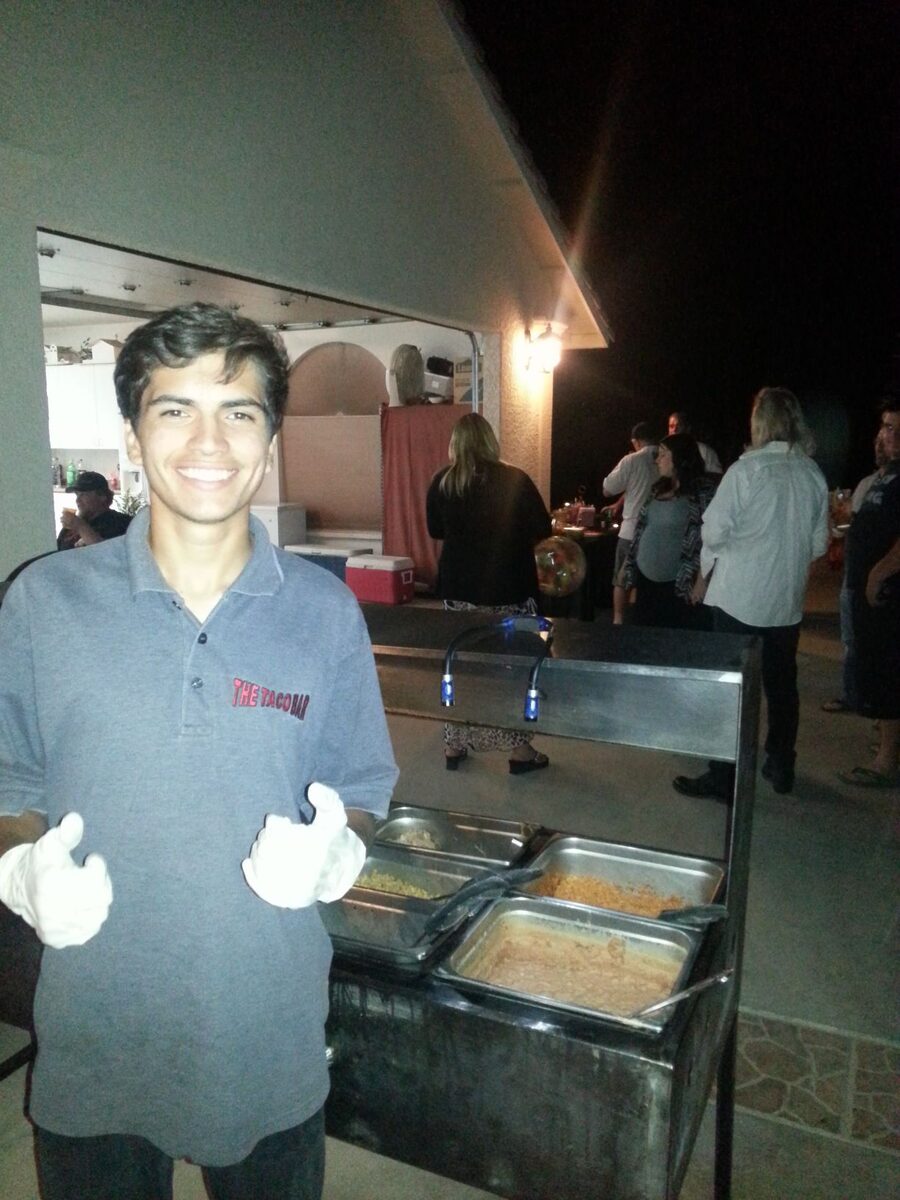
If you cook in Riverside, Temecula, Palm Springs, Moreno Valley, or Chula Vista, your site should say so on a page of its own for each. A location page gives one city room to breathe. It covers your taco catering there, the events you handle in that area, and how a local customer reaches you.
The trap is churning out copies with only the city name swapped. Google sees thin, duplicated pages for what they are. A page worth building reads like it was written for that town, with real details a customer there would recognize. Start with the two or three cities that bring you the most work, not all fifty at once. For the full breakdown, read How to Show Up When Someone Searches for Taco Catering in Your City.
What to Check, and What to Fix First
Before you change anything, look at your own business the way a new customer would. A few minutes of honest checking tells you exactly where the weak spot is. Search your business name on Google, then work through each of these.
- Does the right business show up, with the correct phone number and hours
- Are your service areas listed and accurate
- Are the photos recent, or do they look years old
- Have you replied to your reviews, even the good ones
- Does the profile say taco catering in plain words
- Does your website name the cities you serve
- Can someone request a quote without hunting for your contact info
Now search your main city plus taco catering. Do not panic if you are not on top yet. Just notice what the businesses above you do better, whether it is photos, reviews, city pages, or a sharper category. That tells you your next move.
You do not rebuild everything in one weekend. Start with the single piece costing you the most, then move down the list.
| What you are seeing | Fix this first |
|---|---|
| No profile on Google Maps | Create and verify your Google Business Profile |
| Profile exists but looks dead | Add recent photos, reply to reviews, correct your service areas, and get back on a steady weekly rhythm |
| Customers cannot find a real website | Build a simple site that answers the booking questions |
| Site exists but never names your cities | Add or sharpen a location page for each main city |
The goal is not a perfect setup. It is giving Google and customers enough clear signals to trust that you are active, local, and ready to cook.
Doing It Yourself or Handing It Off
Every piece here is something you can do yourself. The steps are plain, and none of them need a marketing degree. What they need is time, and the discipline to keep it up every week without a gap. That weekly consistency is the whole game, and it is the first thing to slip when you are cooking three events in a weekend.
This is different from the lead apps that take your money and blast your info to a dozen vendors at once. Those platforms treat a taquero cooking on site the same as any random contractor. Real local marketing puts your own listing, your own site, and your own reviews to work, so the calls come to you and only you.
If you would rather keep your focus on the grill, I handle the Google side for taco caterers specifically. That covers the profile and its weekly upkeep, a simple website, location pages, and real people reaching out, ready to book.
Keep Going
Fix each gap with its own walkthrough:
- Set up the profile: Set Up Your Taco Catering Google Profile So Local Searches Turn Into Calls
- Keep it ranking: The Weekly Google Maps Routine for Taco Caterers Who’d Rather Be Cooking
- Decide on a site: When Your Taco Catering Business Actually Needs a Website
- Get found city by city: How to Show Up When Someone Searches for Taco Catering in Your City